
Politics
Kubwa Youths Join The Call For Nigeria’s Electoral Reforms!

- In the quiet hours of an election day, the most powerful tool in Nigeria isn’t a ballot box or a security detail – it’s a smartphone.
As we approach the 2027 general elections, the national conversation has pivoted sharply away from mere “participation” toward a singular, non-negotiable demand: the mandatory, real-time electronic transmission of results. Following the dramatic legislative U-turn in February 2026, where the Senate finally bowed to public pressure to mandate electronic uploads, the message from the streets to the seat of power is clear: Transparency is not a luxury; it is a prerequisite.
A Crisis of Confidence
The demand for real-time transmission isn’t born out of a love for gadgets; it’s born out of a history of “magical” arithmetic. For decades, the journey of a result sheet from a polling unit to a collation center was often a “black box” where numbers could—and did—change.
The 2023 General Elections served as a tipping point. While the introduction of the Bimodal Voter Accreditation System (BVAS) and the INEC Result Viewing (IReV) portal was hailed as a game-changer, the “technical glitches” during the presidential result upload left a scar on the national psyche. Nigerians felt they had been promised a digital window into the truth, only for the curtains to be drawn at the most critical moment.
The 2026 Legislative Tug-of-War
Just this month, we witnessed a high-stakes drama in the National Assembly. Initially, the Senate passed an amendment to the Electoral Act (Amendment) Bill 2026 that made electronic transmission “discretionary”—essentially giving INEC the choice to use it or not.
The backlash was swift and fierce:
Civil Society Organizations (CSOs) like the Situation Room labeled the move “retrogressive.”
The Nigeria Labour Congress (NLC) threatened nationwide protests, arguing that ambiguity only serves the interest of riggers.
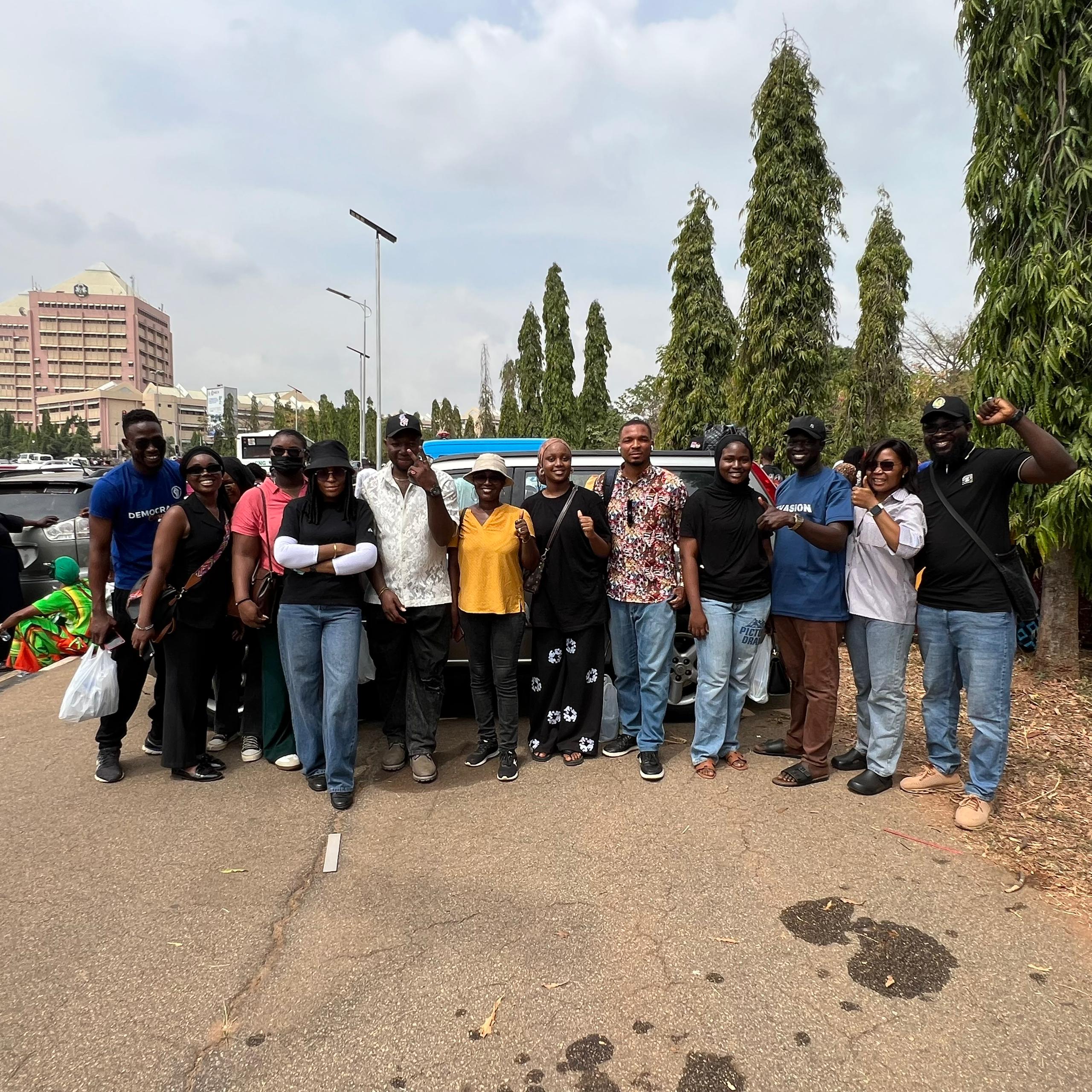
Activista Kubwa cell were present and active in the call for this important change in the way election results are translated. They condemned outrightly the Senate’s cherry picking of the reforms.
Activista Kubwa Cell at the National Assembly yesterday 9th February 2026
The “Netizens”: On X (formerly Twitter) and TikTok, young Nigerians—who make up the bulk of the electorate—made it clear that any election without real-time verification would be viewed as a sham.
In a rare victory for citizen advocacy, the Senate reversed its position on February 10, 2026, agreeing to mandate the immediate electronic uploading of results.
Why Real-Time Transmission Matters
Eliminating the “Middleman”: Real-time transmission bypasses the opportunity for results to be altered during physical transport to collation centers.
Public Auditability: When a result is uploaded to the IReV portal, every citizen becomes an election observer. You can compare the sheet signed at your PU with what is displayed online.
Reducing Violence: Much of Nigeria’s election violence happens at collation centers. If the result is already public knowledge within minutes of the count, the incentive to snatch boxes or intimidate officials at the center vanishes.
The Road to 2027: Beyond the Portal
While the legislative victory is sweet, technology is only as good as the hands that hold it. As we look toward the next cycle, the demands are evolving:
Network Integrity: Demanding that service providers and INEC guarantee 4G/5G coverage even in rural outposts.
Cybersecurity: Ensuring the IReV portal can withstand the inevitable attacks from “bad actors” looking to compromise the data.
Consequences for Failure: Nigerians are now calling for legal penalties for any presiding officer who fails to upload results in real-time without a documented, verifiable reason.
The Bottom Line
The era of “waiting for the radio” to hear who won is over. Nigerians have realized that the vote is only half the battle; the transmission is where the victory is secured. The demand for real-time results is a demand for a country where the people’s choice is loud, clear, and—most importantly—unalterable.
“The truth should not be reconstructed after the fact; it should be visible as it unfolds.”



-
 Kubwa News5 months ago
KUBWA ARAB ROAD LIKE YOU’VE NEVER SEEN BEFORE!
-

 Politics7 months ago
BWARI AREA COUNCIL ELECTION SERIES: HON. SOLOMON DANJUMA GARDA
-

 Business5 months ago
THE OBJECT CALLED WOMAN
-

 Entertainment7 months ago
Mind Your Mind
-

 Politics8 months ago
BWARI AREA COUNCIL ELECTION SERIES: HON. JOSIAH MUSA KOCHE
-
 FCT News8 months ago
WATER DISRUPTION UPDATE
-
FCT News8 months ago
FCT WATER BOARD EXCLUSIVE! WHY YOU ARE NOT BILLED
-

 Fashion8 months ago
Happy Birthday to one of Kubwa’s finest nail artists – Mrs Oge U. Ekenna